
Business
Recyclatanteil: Mastering New EU Packaging Regulations


The European packaging landscape is changing faster than many founders and executives expected. Sustainability is no longer a future ambition or a branding exercise. It is a legal, financial, and strategic reality. At the center of this shift is one concept that keeps appearing in boardrooms, investor decks, and compliance briefings: Recyclatanteil. Understanding what it means and how to respond to it has become essential for companies that sell, ship, or manufacture products in the European Union.
Recyclatanteil refers to the proportion of recycled material used in packaging. What once sounded like a technical metric is now a decisive factor in market access, cost structure, and brand credibility. For startups and established firms alike, mastering Recyclatanteil is not about ticking a regulatory box. It is about aligning innovation, supply chains, and customer trust in a more circular economy.
Why Recyclatanteil Is Now a Business-Critical Metric
For years, packaging sustainability was driven mainly by consumer pressure and voluntary commitments. That era is ending. The EU’s updated packaging and packaging waste regulations have moved recycled content from a recommendation to a requirement. Recyclatanteil is now embedded in binding targets that affect how products can be packaged and sold across member states.
This matters because packaging touches every part of a business. It influences procurement decisions, production costs, logistics efficiency, and even product design. A higher Recyclatanteil can no longer be treated as a marketing claim made by the sustainability team. It has become a measurable performance indicator with direct financial implications.
For founders and tech leaders, this shift creates both pressure and opportunity. Those who adapt early can redesign packaging systems before deadlines hit, while laggards risk penalties, restricted market access, or reputational damage.
Understanding Recyclatanteil in Practical Terms
At its core, Recyclatanteil measures how much of a packaging material comes from recycled sources rather than virgin raw materials. The calculation varies depending on material type, such as plastics, paper, glass, or metals, but the principle remains the same. Regulators are no longer satisfied with recyclable packaging alone. They want proof that recycled materials are actually being used at scale.
This distinction is crucial. A package can be technically recyclable yet still rely entirely on new plastic or paper. Under the new rules, that is no longer enough. Companies must demonstrate an increasing Recyclatanteil over time, backed by documentation and traceability.
For digital-first businesses and startups scaling quickly, this often requires new data systems, closer supplier relationships, and a more hands-on approach to materials sourcing.
The EU Regulatory Framework Driving Recyclatanteil
The push for higher Recyclatanteil comes from a broader EU strategy to reduce waste, cut carbon emissions, and strengthen resource independence. Packaging waste has been identified as a major environmental challenge, especially single-use plastics.
Under the revised regulations, minimum recycled content thresholds are being introduced for various packaging categories. These targets increase over time, creating a clear roadmap but also a moving goalpost. Companies that wait until the last moment may find it difficult to secure compliant materials at reasonable prices.
What makes this framework particularly impactful is its harmonized nature. A product that fails to meet Recyclatanteil requirements in one EU country risks being non-compliant across the entire single market. For businesses operating internationally, this raises the stakes significantly.
Recyclatanteil and the Startup Reality
Startups often assume that sustainability regulations mainly affect large manufacturers. In practice, smaller and younger companies can feel the impact even more acutely. Limited purchasing power makes it harder to negotiate favorable contracts for recycled materials. Lean teams may lack in-house regulatory expertise. Yet startups are also uniquely positioned to adapt faster.
When packaging systems are still evolving, it is easier to design them around higher Recyclatanteil targets from the beginning. Founders who embed recycled content requirements into early supplier agreements avoid costly redesigns later. Investors are increasingly aware of this and now ask detailed questions about packaging compliance during due diligence.
For tech-driven brands, especially in e-commerce, packaging is often the most visible physical touchpoint with customers. A credible Recyclatanteil strategy can reinforce brand values and differentiate products in crowded markets.
The Supply Chain Challenge Behind Recyclatanteil
Achieving a higher Recyclatanteil is not as simple as switching suppliers. Recycled materials must meet strict quality, safety, and performance standards. In food, cosmetics, and pharmaceuticals, these requirements are particularly demanding.
The availability of high-quality recycled inputs varies by region and material type. As demand rises, competition intensifies. Companies that treat Recyclatanteil as a late-stage compliance issue may find themselves priced out of the market or forced into suboptimal compromises.
Building long-term partnerships with recyclers and material processors is becoming a strategic necessity. Transparency and traceability are equally important. Regulators increasingly expect companies to prove the origin and composition of their packaging materials, not just claim compliance.
A Snapshot of Recyclatanteil Targets and Materials
To understand how Recyclatanteil plays out across common packaging materials, the following table provides a simplified overview of typical regulatory expectations and practical considerations.
| Packaging Material | Regulatory Focus on Recyclatanteil | Key Business Consideration |
|---|---|---|
| Plastic | High and increasing minimum targets | Limited supply of food-grade recycled plastic |
| Paper and Cardboard | Moderate targets with strong incentives | Quality consistency and fiber sourcing |
| Glass | Naturally high recycled content | Energy costs and transport weight |
| Aluminum and Steel | Established recycling streams | Price volatility linked to scrap markets |
This overview highlights an important point. Recyclatanteil is not uniform across materials. Each category presents unique risks and opportunities that must be factored into product and packaging strategies.
Recyclatanteil as a Driver of Innovation
While compliance is the immediate concern, Recyclatanteil is also pushing innovation in unexpected ways. Material science startups are developing advanced recycling technologies that improve quality and consistency. Packaging designers are rethinking formats to reduce material use while increasing recycled content.
Digital tools are emerging to track material flows and verify recycled content across complex supply chains. For tech professionals, this creates opportunities to build platforms that turn regulatory complexity into actionable insights.
Companies that embrace this innovation mindset often discover efficiencies beyond compliance. Reduced material usage, simplified packaging designs, and stronger supplier relationships can lower costs and improve resilience.
Communicating Recyclatanteil Without Greenwashing
As Recyclatanteil becomes more visible to consumers, communication requires care. Overstated or vague claims can quickly backfire, especially in markets where regulators actively police greenwashing.
Clear, precise language grounded in verified data is essential. Instead of broad sustainability slogans, companies should explain what their Recyclatanteil actually means in practical terms. This builds trust and aligns marketing with compliance.
For founders, the lesson is simple. Transparency beats perfection. Customers and partners understand that transition takes time, but they expect honesty and measurable progress.
Preparing Your Organization for Recyclatanteil Compliance
Mastering Recyclatanteil is not a one-off project. It requires ongoing coordination between legal, procurement, product design, and marketing teams. Leadership commitment is critical, especially when trade-offs arise between cost, performance, and compliance.
Forward-looking companies establish internal benchmarks that go beyond minimum legal requirements. This provides a buffer against future regulatory changes and signals seriousness to investors and partners.
Training also plays a role. Teams that understand why Recyclatanteil matters are better equipped to make informed decisions at every stage of the product lifecycle.
The Competitive Advantage of Getting Recyclatanteil Right
In the long run, Recyclatanteil will separate companies that merely comply from those that lead. As regulations tighten and consumer awareness grows, recycled content will become a baseline expectation rather than a differentiator.
Early movers gain experience, supplier relationships, and operational knowledge that competitors cannot replicate overnight. They are better positioned to adapt when targets increase or new materials fall under regulation.
For startups and digital-native brands, this is a chance to build credibility early. For established firms, it is an opportunity to modernize legacy systems and align sustainability with long-term growth.
Conclusion
Recyclatanteil is no longer a technical footnote in EU legislation. It is a strategic imperative that affects how products are designed, sourced, and perceived. Companies that treat it as a compliance burden risk falling behind. Those that see it as a catalyst for innovation and trust-building stand to gain.
Mastering Recyclatanteil requires clarity, commitment, and collaboration across the organization. It demands investment, but it also unlocks resilience in a resource-constrained world. For founders, entrepreneurs, and tech professionals navigating the EU market, the message is clear. The future of packaging is recycled, regulated, and full of opportunity for those prepared to lead.

New Mexico is a strong place for bicycle travel because it gives you contrast all day long. A ride can begin in a historic town square, move through quiet farming roads, climb into pine-covered hills, and end in a dry open stretch where the horizon looks much farther away than it did that morning. That constant change keeps the trip alive. You are not staring at the same scenery for six hours, and you are not riding through places that feel interchangeable.
It also asks more from you than a casual weekend path ride. Elevation matters here. Sun matters. Wind matters. Distance between services matters. In some states you can fix a weak plan with a quick stop at the next gas station or chain restaurant. In New Mexico that next stop may be farther away than you expected, closed earlier than you hoped, or smaller than the map suggested. That is not a flaw. It is part of why the ride feels real.
The best New Mexico bicycle trip is not the one with the biggest mileage total. It is the one that balances effort and place. You want enough time to ride hard, but also enough time to stop for green chile stew in a small town, to set up camp before dark, to sit outside a store with a cold drink, or to mark a birthday in a way that actually fits the road you are on. This state rewards that style of travel.
A lot of riders come here expecting either pure desert or pure mountain scenery. The better answer is both. Northern routes can feel old, layered, and cultural, with village churches, winding roads, and real climbing. Central and southern routes can feel wider and harsher, with longer sightlines, stronger wind, and more mental riding. New Mexico gives you choices, which is why planning the route is not just a technical matter. It shapes the whole tone of the trip.
Route One, Santa Fe to Taos on the High Road
If someone wanted one route that explains why New Mexico works so well by bike, Santa Fe to Taos on the High Road would be close to the top of the list. It is not the fastest way between those places, and that is exactly why it belongs in a bicycle article. It rewards slowness. It gives you villages worth entering, climbs worth pacing, and meals worth planning around.
Santa Fe makes an easy starting point. You can wake up in town, get coffee, check your bike one last time, and roll out early while the air still feels cool. The first miles let you settle in without immediate drama. That matters because many riders arrive with too much energy and too much confidence. At New Mexico altitude, a hard first hour has a way of making the next three hours worse.
The ride toward Chimayó introduces the pattern that defines this route. You work, you rise, you descend a little, and then you work again. Nothing feels fake or manufactured. The road follows the land. Houses thin out. The feeling changes from city edge to rural rhythm. This is where you start noticing things that would never matter from inside a car, dogs barking from shaded yards, the smell of dust and wood, old fencing, roadside shrines, laundry moving in the wind.
Chimayó is one of the best kinds of bicycle stops because it serves both practical and emotional needs. Yes, you can refill bottles and sit down. More importantly, you can eat something that feels tied to the place. A stop at Rancho de Chimayó is not just fuel intake. It is a midpoint with character. A plate of red chile, carne adovada, beans, tortillas, or blue corn enchiladas lands differently when you have already climbed into it. The meal becomes part of the route, not a break from it.
This is also a smart place to be honest with yourself. If your legs already feel heavy, the next section will not rescue you. Beyond Chimayó, the road asks for patience. Riders who mistake adrenaline for endurance usually fade here. The stronger move is to settle down, spin steadily, and let the day unfold. New Mexico often punishes urgency. It usually rewards rhythm.
Truchas is one of those places that cyclists remember because it feels perched rather than planted. You arrive there with some effort behind you, and the village seems to sit inside the mountain light in a way that makes you stop for a moment even if you had not planned to. The road in and out of town is part of the appeal. It does not flatten out for your convenience. It keeps its character.
Las Trampas adds another layer. At this point the route is no longer just scenic. It starts to feel historic. Small settlements, older churches, rough edges, and a sense that people live here first and visitors come second. That is good for the ride. It prevents the day from feeling like a staged tourism product. You are moving through real places.
By the time you roll toward Taos, your body usually knows it has done something substantial. This is why Taos works so well as an endpoint. It gives you options. You can stop and recover, stretch the afternoon over a meal, or add another short ride toward the Rio Grande Gorge if you still have life in your legs. That flexibility matters. The town can be a finish line, or it can be a base for one more memory.
If you ride this route over two or three days, it becomes much better. One day lets you survive it. Two or three days let you absorb it. You get time for a long lunch, for photos that are not rushed, for a night in camp or a small inn, and for the sort of conversations that tend to happen only when everyone is a little tired and not trying to hit some heroic mileage target.
Route Two, Down the Rio Grande Toward Truth or Consequences
The route toward Truth or Consequences offers a different type of satisfaction. The High Road to Taos is textured, layered, and village-based. The Rio Grande direction feels more open and more stripped down. It has less ornamentation and more atmosphere. The distances feel larger, the spaces feel emptier, and the road often becomes a test of steadiness rather than variety.
This type of route suits riders who like getting into a rhythm and staying there. You are not constantly stopping to look at architecture or wander through craft shops. Instead, you settle into the day and measure progress through road signs, heat, changing light, and the shape of your own energy. It is a good reminder that bicycle travel is not always about constant stimulation. Sometimes it is about learning to stay with the road you are on.
Planning matters more here because service gaps can become part of the challenge. It is easy to look at a map and assume that a string of small towns solves every food and water problem. In practice, stores have hours, restaurants close, and some places offer less than you imagined. You do not need to turn the ride into a survival exercise, but you do need to carry enough to protect yourself from a bad assumption.
This route also puts wind at the center of the experience. Hills get more attention in bike stories because they sound dramatic, but wind can be more exhausting. A headwind does not look impressive in photos. It just wears you down mile after mile. That is why riders who do well here focus on patience. They do not fight every mile. They accept the slower pace, shorten the day if needed, and keep eating before frustration turns into depletion.
Truth or Consequences gives this route a finish that feels unusually satisfying. Many cycling endpoints are useful but bland. This town has a built-in reward. After a long ride, hot springs make perfect sense. You spend hours exposed to the elements, and then the day ends in still water. The contrast is strong enough that even a simple soak can feel ceremonial.
That is why Truth or Consequences works so well for a birthday stop or a small celebration on tour. You do not need a big itinerary. You can arrive dusty and hungry, check in somewhere modest, soak, change clothes, and go out for dinner. The whole evening feels earned because the day gave it weight. A birthday celebrated after eighty hard miles usually means more than one built around decorations and reservations alone.
The town also has the right scale for tired riders. It is not overwhelming. You can move slowly through it, find food, and keep the night simple. That simplicity helps. On a bike trip, the best celebrations often involve fewer decisions, not more.
Route Three, White Sands and the Southern Ride Experience
White Sands is different from the other two route ideas because it works better as a focused ride or a segment inside a larger trip. It is not about linking multiple mountain villages or tracing a long river corridor. It is about entering a landscape that feels so visually stripped down that the ride becomes almost abstract. White sand, bright sun, road, sky. Not much else.
That simplicity can be beautiful, but it also increases the need for discipline. There is not much shade. The reflected light adds intensity. Water is non-negotiable. Riders who are casual about timing here usually regret it. The best move is early morning. You start before the sun becomes serious, enjoy the silence while the air is still manageable, and leave before the heat turns the whole thing into punishment.
A White Sands ride makes sense for people who want contrast during a broader New Mexico trip. After days of climbing, village stops, and forest-edge camping, a day in this bright open setting resets the senses. It strips the trip down to fundamentals. Pedal, breathe, drink, keep moving.
Because you cannot count on camping inside the dunes, nearby towns such as Alamogordo become part of the plan. That is not a problem. It just means the ride becomes a deliberate excursion rather than a remote overnight adventure. You ride in, take it in, and head back out. Sometimes that is enough.
This area also teaches a broader lesson about cycling in New Mexico. Not every ride needs to be epic in mileage. Some rides matter because they expose you to a place that would feel incomplete from behind a windshield. White Sands is one of those places.
Camping, the Part of the Trip That Changes Everything
A New Mexico bicycle trip feels different once you decide to camp. It stops being just a route and becomes a lived day from morning through night. Your concerns change. You are no longer only thinking about the next turn or the next meal. You start thinking about shade, flat ground, temperature after sunset, how much water to keep for camp, and whether you want to cook or just eat quickly and fall asleep.
Northern New Mexico offers some of the best camping settings for cyclists, especially around Carson National Forest and the broader Taos area. The big advantage is variety. You can choose established campgrounds if you want predictability, or quieter dispersed options if you want a stronger sense of solitude. Both have value. After a brutal day, a picnic table and restroom can feel luxurious. On another day, an isolated patch of ground under a huge sky can feel like the entire point of the trip.
The strongest camping nights usually begin with good timing. Rolling into camp before dark changes everything. You can clean up a little, stretch, cook properly, and actually notice the evening. Arriving late means rushing through setup, eating badly, and falling asleep still buzzing from the day. New Mexico deserves better than that.
Temperature swings are part of what makes camping here memorable. A hot day does not guarantee a warm night. In higher elevations especially, the air can cool fast after sunset. That sharp change is one reason camps feel so good. Your body leaves the tension of the road and enters a different mode. The ride becomes quiet. The horizon darkens. The day stops asking things from you.
Food at camp also matters more than people expect. A basic pot of noodles, rice, beans, tortillas, or soup can taste excellent if you arrive there honestly tired. This is one place where overthinking does not help. The best camp meals are usually simple, warm, and salty. They do not need to impress anyone.
The silence of camp is another reason people remember New Mexico. In some places silence feels empty. Here it often feels full. You hear wind move differently through open land than through forest. You hear your stove, your own movements, and sometimes nothing at all for long stretches. After a full day on the bike, that quiet can feel like part of the reward.
Food Stops That Make the Route Better
Food on a New Mexico bike trip is not just about avoiding hunger. It shapes the day. One good breakfast can carry your mood for hours. One badly timed missed lunch can make the rest of the ride feel longer than it should. Because of that, the smartest riders here treat meals as route features, not random breaks.
Santa Fe is an easy place to start well. A breakfast burrito, eggs with chile, or a full dinner breakfast before departure gives the morning structure. Starting underfed is one of the dumbest mistakes a rider can make in this state because the first hours can feel deceptively manageable. By the time hunger becomes obvious, you may already be on a climb or far from the stop you should have planned.
Chimayó, again, stands out because it offers a meal with real identity. You are not grabbing packaged food under fluorescent lights. You are sitting down in a place tied to local cooking traditions. That changes how the ride feels. It makes the route memorable in a human way.
Taos gives you flexibility. You can keep it simple with a casual meal, or you can decide that the ride deserves something more social. A local brewery, a restaurant with live music, or even just a long dinner outdoors can work. At that point, calories still matter, but mood matters too.
Smaller towns are often where the best food memories happen. A diner with no design ambition, a small bakery, a market with better burritos than expected, a roadside cafe where the seats are worn and the service is blunt. Those places stay with riders because they feel discovered rather than advertised. Sometimes the comfort comes from something as ordinary as sinking into padded restaurant booths after hours on a narrow saddle and realizing your whole body needed that softness more than another scenic overlook.
The best rule is still simple. Eat before you are desperate. Carry backup food that you actually like. Do not depend entirely on one restaurant being open. New Mexico rewards appetite, but only if you respect timing.
How to Celebrate a Birthday on the Road Without Making It Corny
A birthday on a bicycle trip can go wrong if you force it. It works best when the ride stays at the center and the celebration grows out of it naturally. That usually means choosing one meaningful stop, one good meal, one memorable evening, and not trying to turn the whole day into an event production.
Taos is a strong birthday stop because it can hold different moods. If you want energy, you can find it. If you want quiet, you can get that too. A rider can finish the High Road, clean up, and go out for a dinner that actually feels like a reward. Add a drink, some live music, maybe dessert, and that is enough. The day already did most of the work.
Truth or Consequences offers another version. This one is calmer and, for many riders, better. You arrive worn out, soak in hot springs, then eat slowly. That is the celebration. No one needs to pretend it is glamorous. The power comes from contrast. The body goes from effort to stillness. That shift feels bigger than a lot of more expensive birthdays.
A camp birthday can be just as strong. It may even be the most memorable option if the weather cooperates. You ride until late afternoon, set up camp somewhere beautiful, cook a slightly better meal than usual, and let the day close out naturally. Maybe there is a bakery stop earlier for something sweet. Maybe another rider produces a candle from nowhere. Maybe the whole thing is just tortillas, beans, laughter, and a sky that keeps getting darker. That can be enough.
The reason these road celebrations work is that they are tied to movement. You did not teleport into the moment. You rode there. The place, the meal, and the people feel connected to the effort that came before them.
The Hard Parts, Wind, Heat, Altitude, and Mental Fatigue
No honest article about cycling in New Mexico should make it sound easy. It is not brutal every hour, but it does ask for focus. Riders who enjoy it most are usually the ones who expect some friction and are not shocked when the day gets harder than the plan suggested.
Wind is often the most annoying challenge because it is so stubborn. Hills eventually end. Wind can stay with you for hours. It can also break morale faster than climbing because it makes you feel like your effort is not producing enough progress. The answer is not clever. You lower expectations, stay fed, and keep going.
Heat can be more dangerous. In exposed sections, especially farther south, the sun is not background scenery. It is part of the workload. Riders need to start early, cover up if necessary, and stop pretending that water is optional weight. Carrying extra may feel annoying until the moment it feels brilliant.
Altitude causes a subtler kind of damage. You may not notice it right away. You just feel a little flatter, a little slower to recover, a little less sharp on climbs. That is why the first day should be conservative if you are not acclimated. There is no reward for proving a point too early.
Mental fatigue shows up when the road gets repetitive or when progress feels slow. This is where route style matters. Some riders need frequent village stops and visual changes. Others prefer the meditative effect of longer open stretches. Knowing which type you are can make the difference between a satisfying ride and a draining one.
Mechanical preparation matters too. New Mexico is not the place to discover that your tires were nearly done, your low gears were inadequate, or your repair kit was mostly symbolic. A spare tube, pump, tools, sun protection, and a realistic food buffer are basic respect for the route.
What Stays with You After the Ride
When people remember a bicycle trip through New Mexico, they usually do not remember average miles or exact moving speed. They remember sequences. They remember how the morning felt leaving Santa Fe, the hunger that built before Chimayó, the relief of a proper meal, the long pull toward Taos, the strange brightness of White Sands, the silence of camp, or the moment they sank into hot water in Truth or Consequences and felt the ride leave their legs.
That is why New Mexico works so well. It does not offer one giant highlight that overwhelms everything else. It builds memory in layers. A good road. A hard climb. A small town. A better-than-expected lunch. A campsite that cools fast after sunset. A birthday dinner that felt more meaningful because you arrived sweaty and tired instead of dressed for display.
The strongest version of this trip is not about proving toughness. It is about letting the state show its variety at bicycle speed. Fast enough to cover real ground. Slow enough to feel where you are. That balance is hard to get anywhere else.
If you plan well, ride honestly, and leave room for stops that matter, New Mexico gives back a lot. It gives you routes with character, camps with silence, food with identity, and celebrations that do not feel staged. On two wheels, the state becomes less like a destination and more like a sequence of earned moments. That is why riders come back talking about it the way they do.

Expanding into Canada is one of the fastest ways for U.S. and international exporters to grow revenue. The Canadian market is stable, high-income, and geographically accessible.
The most efficient way to sell into Canada without opening a physical office is by becoming a Non-Resident Importer (NRI).
This guide explains exactly how to become a Non-Resident Importer in Canada, step by step, and how to simplify the process using a fully digital customs brokerage platform like Clearit.
What Is a Non-Resident Importer (NRI)?
A Non-Resident Importer (NRI) is a U.S. or foreign business that acts as the importer of record when shipping goods into Canada.
Instead of your Canadian customer handling customs clearance, duties, and taxes, you — the exporter — manage the import process and provide landed cost pricing.
This allows you to:
- Offer delivered pricing (DDP model)
- Remove customs friction for customers
- Compete with Canadian suppliers
- Control the supply chain experience
- Eliminate surprise brokerage fees
Now let’s walk through how to set it up.
Step 1: Obtain a Canadian Business Number (BN)
To import goods into Canada, you must first obtain a Canadian Business Number (BN) from the Canada Revenue Agency (CRA).
The BN serves as your official identifier for:
- Import/export activities
- GST/HST accounts (if applicable)
- Government reporting
You do not need to incorporate in Canada.
You do not need a physical presence.
A foreign entity can register directly as a Non-Resident Importer.
Step 2: Register for an Import/Export Account with CBSA
After obtaining a BN, you must register an Import/Export (RM) account with the Canada Border Services Agency (CBSA).
This activates your ability to:
- Act as importer of record
- Pay duties and taxes
- Clear shipments through Canadian customs
- Issue commercial invoices under your NRI structure
Without this registration, you cannot legally act as the importer of record.
Step 3: Set Up CARM (CBSA Assessment and Revenue Management)
Canada now requires importers to register in CARM (CBSA Assessment and Revenue Management).
CARM allows you to:
- Post security (bond)
- Manage duty payments
- View transaction history
- Control account access
- Monitor compliance activity
As an NRI, you must:
- Create a CARM Client Portal account
- Register your BN
- Set up financial security (bond)
- Assign a customs broker (if applicable)
Failure to complete CARM registration may prevent cargo release.
Step 4: Assign a Customs Broker
To streamline clearance, most NRIs assign a Canadian customs broker.
Traditionally, this meant paperwork, emails, and manual back-and-forth communication.
However, platforms like Clearit Canada operate as a fully digital online customs brokerage platform — meaning:
- No manual paperwork handling
- No traditional broker phone dependency
- Fully online shipment submissions
- Digital document uploads
- Transparent pricing
- Real-time tracking
Everything is managed digitally through the platform, allowing exporters to maintain control while eliminating administrative friction.
Step 5: Understand GST/HST Obligations
As a Non-Resident Importer, you are responsible for:
- Duties (if applicable)
- GST (5%)
- Provincial HST (if applicable)
In many cases, NRIs may register for GST to:
- Recover input tax credits
- Improve tax efficiency
- Avoid cascading tax costs
Proper tax structuring is important, especially for high-volume exporters.
Step 6: Ship Under a Delivered Duty Paid (DDP) Model
Once registered as an NRI, you can ship to Canada under a Delivered Duty Paid (DDP) model.
This means:
- You act as importer of record
- You pay duties and taxes
- Your Canadian customer receives goods with no surprise charges
- Pricing is transparent and landed
The DDP model significantly improves conversion rates for Canadian buyers because it removes customs uncertainty.
This is one of the biggest competitive advantages of becoming a Non-Resident Importer.
Why Becoming an NRI Increases Sales
Canadian buyers prefer:
- Transparent pricing
- No brokerage surprises
- No customs paperwork
- Faster delivery
- Domestic-like purchasing experience
When you remove border friction, you reduce abandoned orders and increase repeat business.
For many U.S. exporters, NRI status creates a level playing field with Canadian suppliers — without needing a warehouse or office in Canada.
Common Questions About Becoming an NRI
Do I need a Canadian corporation?
No. A foreign entity can register as a Non-Resident Importer.
Do I need a physical office in Canada?
No physical presence is required.
How long does NRI setup take?
Setup time varies depending on documentation and CARM registration status.
Can everything be done online?
Yes. Modern digital brokerage platforms allow full online registration and clearance management.
How Clearit Canada Simplifies the Process
Clearit Canada operates as a fully digital online customs brokerage platform designed to simplify Non-Resident Importer setup and clearance.
With Clearit:
- NRI registration can be completed digitally
- Documentation is uploaded online
- Shipments are submitted electronically
- Pricing is transparent
- CARM integration is streamlined
- No traditional in-person broker dependency
Everything is managed through a structured digital workflow.
Ready to Become a Non-Resident Importer?
Becoming a Non-Resident Importer allows you to:
- Expand into Canada without a physical presence
- Offer transparent landed pricing
- Compete directly with Canadian suppliers
- Control your cross-border customer experience
- Improve margins and reduce supply chain friction
If you’re planning to sell into Canada, the Clearit Canada digital customs brokerage platform can help simplify your NRI registration and clearance setup entirely online.

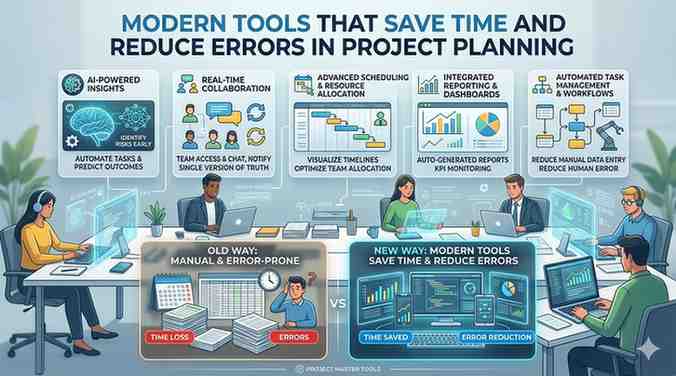
Efficient undertaking planning is the backbone of any successful construction or design challenge. In today’s aggressive world, errors in planning can lead to delays, price overruns, and frustration for all stakeholders concerned. Fortunately, modern-day gear is reworking the way tasks are designed, predicted, and accomplished. These gears are designed to save time, limit human errors, and improve accuracy, in the end boosting common productivity.
From advanced drafting software programs to sensible estimating structures, technology is empowering specialists—alongside support from an Electrical Estimating Company—to streamline their workflow and acquire extraordinary results with minimal hassle. Let’s discover how those gears are reshaping project planning and why adopting them is no longer optional for forward-thinking corporations.
The Role of Precision Drafting in Reducing Errors
One of the most common inefficiencies in undertaking is incorrect drafting. Traditional hand-drawn blueprints often lead to misunderstandings, miscalculations, and transformations. Modern drafting answers, specifically drafting services, provide a solution by means of permitting particular, unique, and easily modifiable designs.
This equipment enables task teams to visualize every issue of a building or mechanical system earlier than actual construction starts. By simulating layouts, checking for spatial conflicts, and supplying virtual revisions, drafting software programs reduce the likelihood of steeply priced mistakes. This degree of precision no longer only ensures smoother execution but also fosters collaboration amongst architects, engineers, and contractors.
Streamlining Design Collaboration Through Technology
Another gain of advanced drafting platforms is their collaborative abilities. Teams no longer need to rely totally on physical conferences or paper-based critiques. Cloud-based answers permit multiple stakeholders to get admission to, overview, and comment on designs in real-time.
For instance, with the use of drafting services, undertaking managers can share plans immediately, obtain remarks, and enforce adjustments without waiting for the next review cycle. This notably shortens timelines and ensures that mistakes are caught early within the design section, stopping high-priced delays throughout construction.
Automating Estimations for Accurate Budgeting
Once the layout segment is complete, the next project is accurate price estimation. Even minor miscalculations can inflate mission budgets or derail timelines. Modern equipment now combines shrewd algorithms to offer particular projections primarily based on fabric portions, hard work charges, and market costs.
A construction estimation company plays a crucial function in this manner, leveraging software that automates calculations while keeping flexibility for custom challenge requirements. By combining the expertise of a Construction Estimator with technology, those services reduce mistakes that generally arise from manual estimation strategies.
Enhancing Risk Management Through Digital Solutions
Predicting potential risks in a task is notoriously hard, in particular in large-scale structures. By the usage of cutting-edge planning tools, a production estimating business enterprise can discover threat elements, consisting of cost overruns, resource shortages, and scheduling conflicts, before they arise.
Sophisticated software program gives situation analysis, permitting planners to simulate more than one outcome and broaden contingency techniques. This proactive technique ensures that initiatives stay heading in the right direction even when surprisingly demanding situations arise, ultimately saving money and time.
Optimising Resource Allocation for Maximum Efficiency
Managing sources—exertions, substances, and systems—is a sensitive balance that directly impacts challenge timelines. Modern challenge-making tools help reveal useful resource underutilization in real-time, ensuring that allocations are optimized for performance.
By integrating those structures, professionals can tune development, predict bottlenecks, and make records-driven modifications. In addition, collaboration with construction estimating businesses guarantees that each monetary and physical resource is calculated accurately, reducing waste and enhancing productivity.
Leveraging Analytics to Improve Project Outcomes
Data analytics has come to be a game-changer in production planning. By studying beyond challenge records, groups can discover trends, assume commonplace mistakes, and put in force first-class practices in cutting-edge initiatives. Advanced software equipment generates insights that allow managers to optimize each stage of production.
Working with skilled construction estimation companies can integrate analytical insights with industry know-how, ensuring that initiatives are completed on time and within budget. The integration of statistics-driven selection-making transforms planning from a reactive system into a proactive, results-oriented strategy.
Final Thoughts
Incorporating modern-day gear into undertaking planning is no longer a luxury—it’s a necessity. From precision drafting with a Freelance CAD Drafter to automated estimation, risk management, and aid optimization, technology enhances accuracy, reduces mistakes, and saves vast amounts of time. Companies that undertake these improvements enjoy smoother task execution, decreased fees, and improved collaboration between groups.
For specialists seeking to preserve an aggressive area, partnering with experts and making use of advanced software solutions guarantees that each venture is planned with precision and achieved with self-assurance. The destiny of project planning lies in clever tools that empower groups to work smarter, no longer harder.
Frequently Asked Questions
Q1: How do modern-day drafting tools reduce errors in construction tasks?
A1: They provide precise digital designs that may be without difficulty modified, reviewed, and simulated to prevent conflicts earlier than production starts.
Q2: Why is automated estimation crucial in project planning?
A2: It minimizes human blunders, ensures accurate budgeting, and lets undertaking managers make data-driven choices on resource allocation.
Q3: Can Era completely update the need for an estimating corporation?
A3: No. While software programs aid accuracy, skilled professionals are crucial for decoding information, handling custom eventualities, and supplying professional judgment.
Q4: What are the main benefits of integrating analytics into venture planning?
A4: Analytics enables identifying styles, counting on dangers, optimizing aid allocation, and implementing great practices to enhance universal project results.
-

 Uncategorized3 months ago
Pакитовица: The Future Of Balkan Escape for Tourists
-

 Technology2 months ago
Snapjotz com: The Fastest Way to Capture and Organize Digital Notes
-

 Technology4 months ago
Newtopy: The Future of Digital Innovation
-

 Lifestyle4 months ago
Who is Brandy Quaid? Growing Up in a Hollywood Acting Dynasty
-

 Business2 months ago
Bynethi com: Transform Your Business Workflow with Scalable Solutions
-

 Blog4 months ago
Araachell: Elevate Your Wardrobe with Modern Classics
-

 Lifestyle4 months ago
Daylin Ryder: Elevating Collegiate Athletics Media Presence
-

 Business4 months ago
Eschopper: The Best Electric Mopeds for Urban Commuting