
Uncategorized
Opal Gemstone Buying Guide: Tips to Check Authenticity

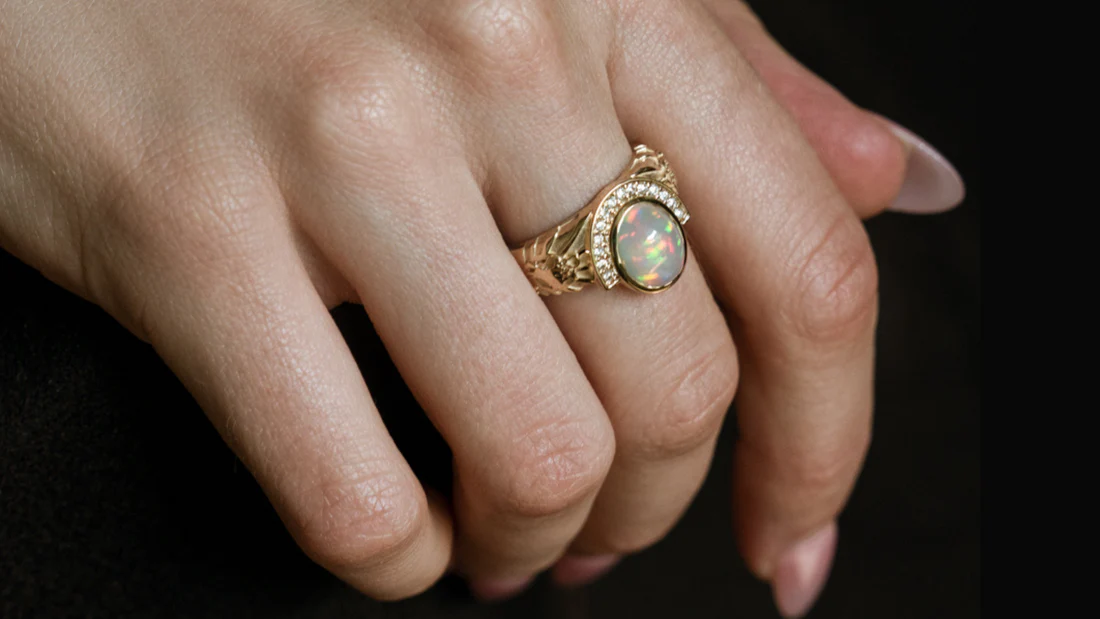
Gemstones are the most valuable commodities, where we think a hundred times before buying. One such traditionally precious gemstone is Opal. Known for its colorful and attractive appearance, it brings peace, fortune, and wealth to the owner. Natural opals are around 60% as hard as diamonds.
But the big question arises when you go out in the market to get the real opal gemstone. Yes, there are multiple artificial opal gemstones available under the name of genuine opal.
Therefore, here are the most necessary factors to help you identify and buy opal gemstone online from a trusted store.
Essential Factors to Determine the Authenticity of the Opal Gemstone
-
Symmetry
When you see an artificial opal, it has distinct visible layers at the sides. A thin opal is connected to a dark backing, making the two layers visible. There are times when you can spot three layers, with the top layer consisting of a material that is not an authentic opal gemstone.
-
Foiling
When you feel a black or grey-colored hard plastic substance at the back or bottom of the opal stone, consider it artificial. It is a foiling material known as vitrolite backing, a kind of glass.
Sometimes the work gets trickier when the brown-colored light and clear backing are observed. People also confuse the opal gemstone with natural fire opal or natural opal stone.
If you choose to buy opal jewelry pieces with a fixed base, it is difficult to find the sides and back.
-
Transparency and Color
Transparency is a great way to find the authenticity of the natural opal gemstone. Just by looking at the pure white stone color, you can determine its transparency. If this is right, then you have the real opal stone. And, if you notice a dark body tone with black artificial backing, it might be a synthetic variant.
And a yellow, red, or orange hue is considered a natural fire opal gemstone. It is one of those gemstones that come in these shades rather than white.
-
Pattern
Several gemstone experts use websites to find laboratory-prepared artificial opals exhibiting large color patches. Additionally, the patches of color are seen as perfect, sometimes representing a snakeskin pattern.
Observing the pattern is essential, as ‘imitation opal’ is made by mixing foil or colored tinsel underneath to make it more colorful. A natural opal gemstone has an appealing, irregular pattern of different colors reflecting.
-
Checking the Top Surface
When the opal gemstone’s top is smooth and glassy, there are more chances of buying a fake stone. Many artificial opal gemstones are made using a hard, clear plastic or quartz capping to give a glossy effect.
A natural opal stone has an unpolished, irregular finish, with no plastic material processing or capping.
-
Country of Origin
It is necessary to find the origin of the opal gemstone you are buying. At GemstonesForSale, we particularly sell our customers natural opal gemstones mined in Australia, which produces around 95% of the world’s real stone.
If the opal you bought is not from Australia, you should be cautious of high-quality artificial opal stone from Russia and Hong Kong.
-
The Natural White Light
Expose the opal to natural direct sunlight to find the array of colors. A natural opal gemstone has various color layers to show a rainbow-like color scheme. But if the color is seen immediately below the surface, the opal stone is fake.
Now that we know several tips to check the genuineness of opal gemstones, let us learn about some of the scientific tests to check the authenticity of the opal.
Tests to Check the Original Opal Gemstone
Here are some simple, thorough tests to get a strong hint for checking the originality of the opal gemstone.
#Test 1- UV Light Test
The ultraviolet UV light test is a blacklight glow stones, also known as the fluorescence effect. A natural opal stone shows a soft and subtle glow under the UV light. Lab-made or synthetic opals show a dull, strong, and sickly green color glow under UV lights.
The UV light test is not fully conclusive, as natural opals, such as Black or Ethiopian Opals, do not glow much.
#Test 2- Magnification Test
Magnification test can be performed using a small magnifying glass or the phone’s zoom option. The test helps you find natural flaws or inclusions in the stone. The natural real opal gemstones may have tiny natural flaws. You will only be able to see thin lines that look like small cracks or specks of the rock, like trapped sand or ironstone.
A gemstone that is perfect, clean, and has zero flaws is often a warning sign of a synthetic opal.
#Test 3- Refractive Index
Refractive Index, or RI, is a test to find out the bending of the light ray as it enters the stone. It examines the stone; it is a doublet or triplet.
For instance, take a clean cup of water and place the opal gemstone inside for some hours. The real Opal stone will remain the same. The water will seep into the cup joints if the gemstone is a doublet or triplet, and the glue keeping the layers is weak.
It makes the opal milky, cloudy, and foggy, especially the stone’s straight lines where the two parts meet.
If this occurs, your opal gemstone is truly fake.
The Last Lines
The Opal Gemstone is a symbol of power and beauty. However, when you have the original one, it brings luxury, beauty, and astrological advantages. It is not essential to be a professional gemologist to buy a safe opal stone. Check the sides, play of color, and get a certified report to choose a natural, real opal.
So, it is time to shop smartly, wear confidently, and let the majestic fire of your opal gemstone light up your life bright.

Whales: Giants of the Ocean
Whales are among the largest and most remarkable animals on Earth. These marine mammals live in oceans around the world, from warm tropical waters to the cold seas surrounding the poles.
Life Beneath the Surface
Although whales spend their lives in water, they breathe air through blowholes located on top of their heads. They must regularly return to the surface to breathe before diving again in search of food or traveling through the ocean.
Whales are warm-blooded, give birth to live young, and nurse their calves with milk. A thick layer of fat called blubber helps protect them from cold water and stores energy during long migrations.
Two Main Groups
Whales are generally divided into baleen whales and toothed whales. Baleen whales filter small animals from the water using flexible plates inside their mouths. This group includes blue whales, humpback whales, and gray whales.
Toothed whales use teeth to catch fish, squid, and other prey. Many of them also use echolocation, producing sounds and listening for returning echoes to understand their surroundings. Sperm whales, belugas, and orcas belong to this group.
The Blue Whale
The blue whale is the largest known animal to have ever lived. An adult can grow longer than a city bus and weigh well over one hundred tonnes. Despite its enormous size, it feeds mainly on tiny crustaceans called krill.
Communication and Migration
Whales communicate using clicks, whistles, pulses, and complex songs. Some sounds can travel across great distances underwater. Humpback whales are especially famous for their long, patterned songs.
Many species migrate thousands of kilometres each year. They often feed in cold, nutrient-rich waters before traveling to warmer regions where they mate and give birth.
Protecting Whales
Commercial hunting once caused severe declines in many whale populations. Today, whales also face threats from fishing gear, ship collisions, underwater noise, pollution, and changes to ocean ecosystems.
Conservation programs, safer fishing practices, protected habitats, and international cooperation can help whale populations recover. Protecting whales also supports healthier oceans because these animals play an important role in marine food webs and nutrient cycles.
-

 News9 months ago
5 Signs of a Silverfish Infestation You Should Never Ignore in Norway
-

 Finance8 months ago
Planning Strategies for Securing Your Financial Independence
-

 Finance8 months ago
Scaling Without Spilling: How Fast Growth Stays Accountable
-

 Uncategorized8 months ago
The Future of Personalized Tutoring: Trends Transforming Global Education
-

 Real Estate5 months ago
Careers Huntington WV: How to Launch a Real Estate Career in 2026
-

 Uncategorized7 months ago
Why Clutches Are a Go-To Option for Evening Events
-

 Uncategorized6 months ago
Healthy Aging at Home: Daily Habits That Make the Biggest Difference
-

 Life style3 months ago
The Untold Story of Joanna Sturm’s Family